Musing on Kandinsky’s Point and Line to Plane
Moving from nature and tornadoes to Kandinsky’s passionate philosophy about art making is a relief, even though the drama is revealed in the artist’s non-objective paintings. In his essay, “Point and Line to Plane,” he says the point is akin to language and is a language signifier. The point as period, but further he says that the point is a “tension, a temporary presence.” “Point and Line to Plane’ could be a drawing manual, giving artists compositional guidance through the use of these elements. Line can be quiet or thrusting. It’s all about mark making on a black sheet of paper, thus creating a composition. In literature, point (or period) indicates pause between two sentences (or lines). In music a pause/period after a musical note creates a Mozart or a Beethoven composition. Point, line and plane are interwoven among the arts. Now my questions is: What is the content in the pauses/silence between points/periods.
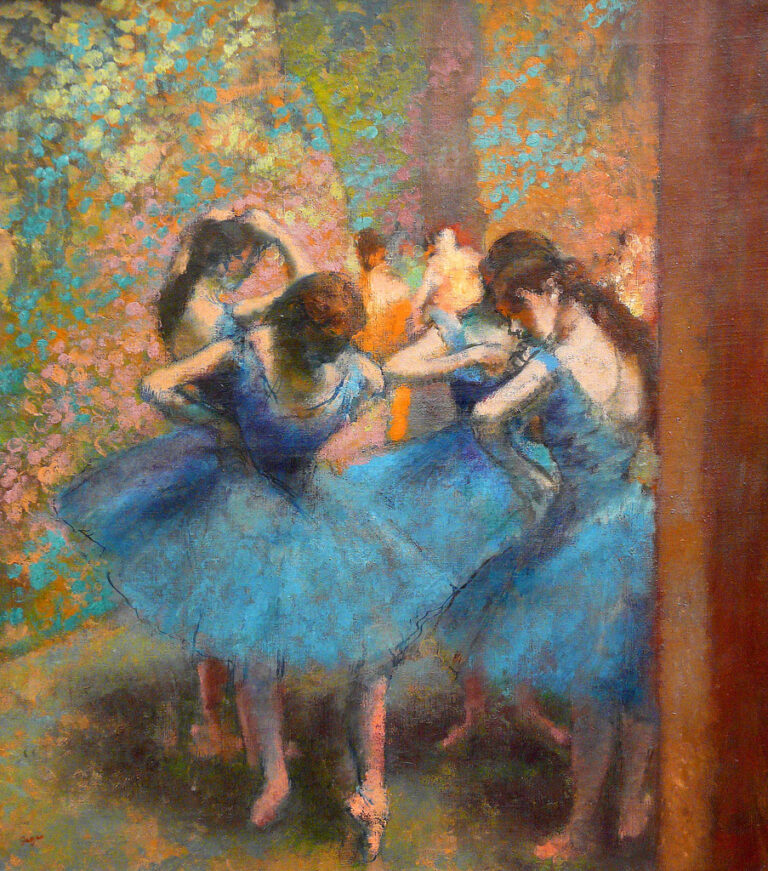
To the best of my understanding of his book, the space between Points is nothing, it is empty. If one applies his theories to paint, then the points are dots or blotches of paint and the Plane is the canvas and what is between the blotches is either primed or color-washed canvas. If one has applied his theories to music then the Points are notes and the Plane is the music bars (I hope that’s the term, I’m not a musician). Now if you extend this all to Lines, then the size of the Points must be sufficiently wide to overlap or at least touch, else you would not have a Line. In music the duration of the note (size) would need to be sufficiently long to “touch” upon or transition to following note.